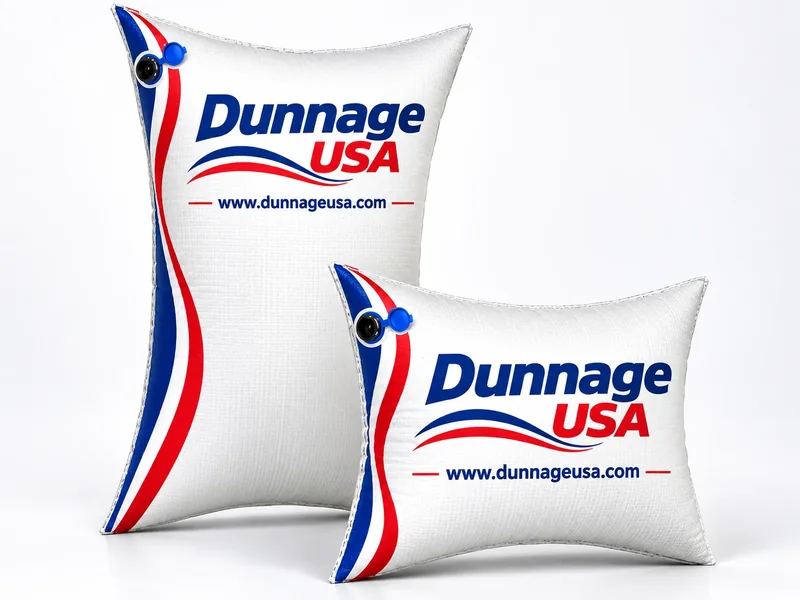
Woven PP Dunnage Bags
Woven polypropylene outer resists moisture and punctures — for truck, intermodal and ocean container loads.
- Strength levels 0 to 5
- 19 standard sizes, custom on request
- Fast-fill valve
- Water- and tear-resistant
Dunnage bags — also called dunnage air bags — are inflatable bags that fill the gaps between pallets so loads can't shift in trucks, intermodal and ocean containers. Choose woven PP bags in six strength levels and 19 standard sizes, or twin and square bags for wide gaps.


Woven polypropylene outer resists moisture and punctures — for truck, intermodal and ocean container loads.
The woven PP outer handles humid lanes and ocean containers.
Resists punctures and abrasion from pallets and cartons.
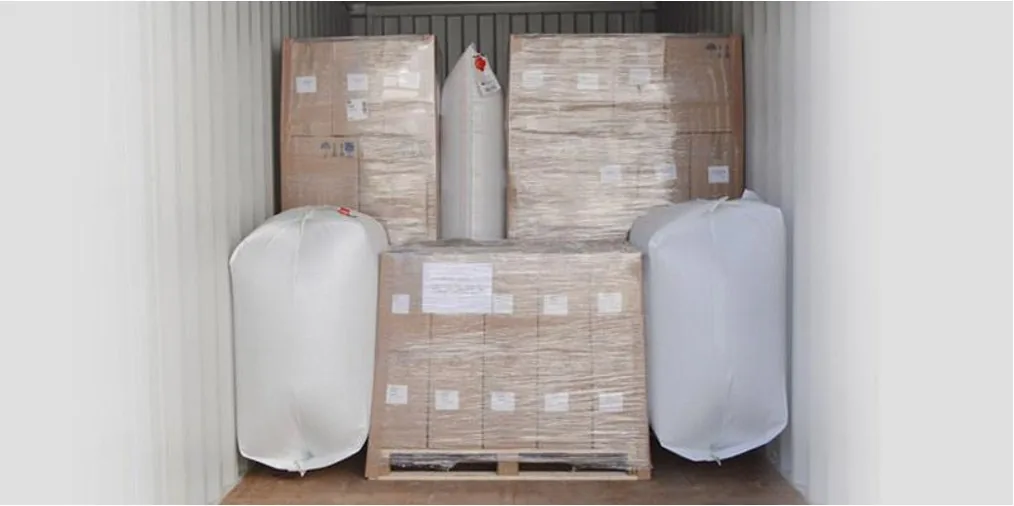
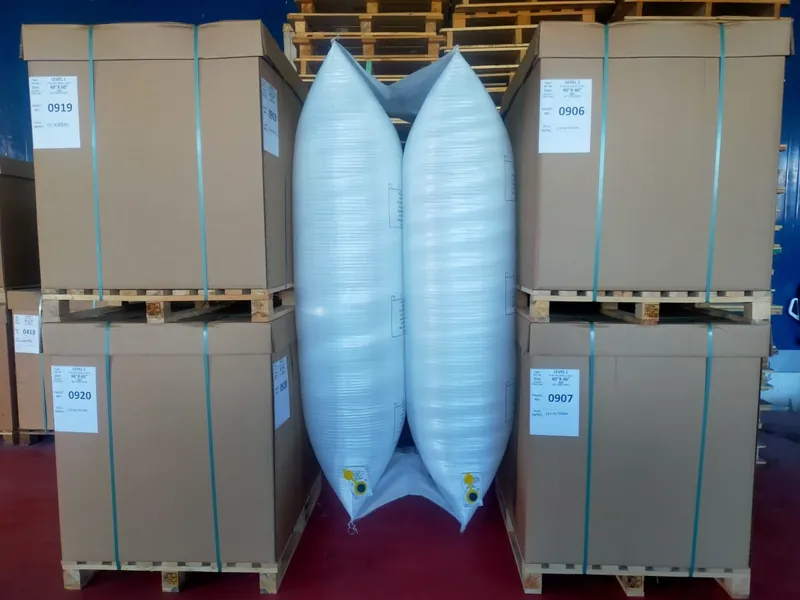
For gaps too wide for one bag. Two bags are joined side by side so they fill the space together, as in the photo. Mostly supplied in Level 1, in various sizes.

Two bags joined side by side for gaps too wide for a single bag to fill — common between large pallets and at the end of a load.
Covers spaces a single bag can't, so wide gaps don't need awkward extra filler.
Two bags spread the pressure over a larger area and keep heavy cargo anchored in place.
Use them for multiple trips — lower cost per shipment and less waste.
Place the pair in the gap and inflate each bag through its own valve.
Built for containers, where the gap at the end of a load or between pallets is more than 12 inches (30 cm). One square bag fills the space without extra filler, as in the photo.

Wide, square-shaped polypropylene bags for containers. They fill large gaps on their own — no extra filler needed.
For gaps larger than 12 in (30 cm) — no additional gap fillers needed.
Absorbs impact pressure up to 44,000 lbs (19,958 kg). Maximum working pressure is 2.9 psi (0.20 bar).
Waterproof, reusable and recyclable, and easy to inflate and deflate.
Measure the gap first. A single woven PP bag covers most gaps between pallets; when the gap is too wide for one bag, use a twin bag, and for gaps over 12 inches (30 cm) in a container, a square bag.
| Bag | Best for | Gap | Strength |
|---|---|---|---|
| Woven PP Dunnage Bags | Gaps between pallets on most loads | Gaps a single bag can fill — see the size chart | Levels 0–5 |
| Twin Dunnage Bags | Gaps too wide for a single bag | Wide gaps | Mostly Level 1 |
| Square Dunnage Bags | Large gaps in containers (not for high loads) | More than 12 in (30 cm) | Ask us |
Our most common sizes, with the approximate number of bags that fit on one pallet (skid) at each strength level. Custom sizes are available on request.
| Size (inches) | Level 0 | Level 1 | Level 2 | Level 3 | Level 4 | Level 5 |
|---|---|---|---|---|---|---|
| 24 × 24 | 1,280 | 1,075 | n/a | n/a | n/a | n/a |
| 24 × 36 | 1,150 | 1,000 | 400 | 300 | 270 | 245 |
| 24 × 48 | 1,025 | 975 | 350 | 270 | 250 | 215 |
| 36 × 36 | 1,025 | 1,000 | 400 | 300 | 270 | 245 |
| 36 × 48 | 950 | 900 | 350 | 270 | 250 | 215 |
| 36 × 60 | 900 | 725 | 315 | 210 | 215 | 190 |
| 36 × 66 | 875 | 725 | 300 | 200 | 200 | 170 |
| 36 × 72 | 850 | 700 | 300 | 200 | 200 | 170 |
| 36 × 84 | 700 | 600 | 250 | 185 | 180 | 155 |
| 36 × 96 | 650 | 500 | 240 | 175 | 165 | 145 |
| 40 × 40 | – | 900 | – | – | – | – |
| 48 × 48 | 700 | 650 | 315 | 250 | 210 | 180 |
| 48 × 60 | 650 | 600 | 300 | 225 | 210 | 165 |
| 48 × 72 | 600 | 550 | 260 | 210 | 180 | 150 |
| 48 × 84 | 550 | 500 | 250 | 180 | 165 | 135 |
| 48 × 96 | 450 | 425 | 210 | 175 | 140 | 115 |
| 60 × 60 | 400 | 325 | 275 | 165 | 150 | 115 |
| 60 × 72 | 375 | 300 | 240 | 140 | 120 | 95 |
| 60 × 94 | 300 | 235 | 165 | 90 | 90 | 80 |
Quantities are approximate. n/a or – means that size is not made at that level.
Bags come in strength levels. The heavier the load and the rougher the ride, the higher the level you need. Tell us your load and route and we'll match the right level.
| Level | Typical load | Usually shipped by |
|---|---|---|
| Level 0 | Light loads | Truck, intermodal |
| Level 1 | Standard loads | Truck, intermodal, ocean container |
| Level 2 | Standard loads | Truck, intermodal, ocean container |
| Level 3 | Heavy loads and export containers | Truck, intermodal, ocean container |
| Level 4 | Heavy loads | Truck, intermodal, ocean container |
| Level 5 | The heaviest, densest loads | Truck, intermodal, ocean container |
A general guide only. Load weight, gap size and route all matter; we confirm the level with every quote.
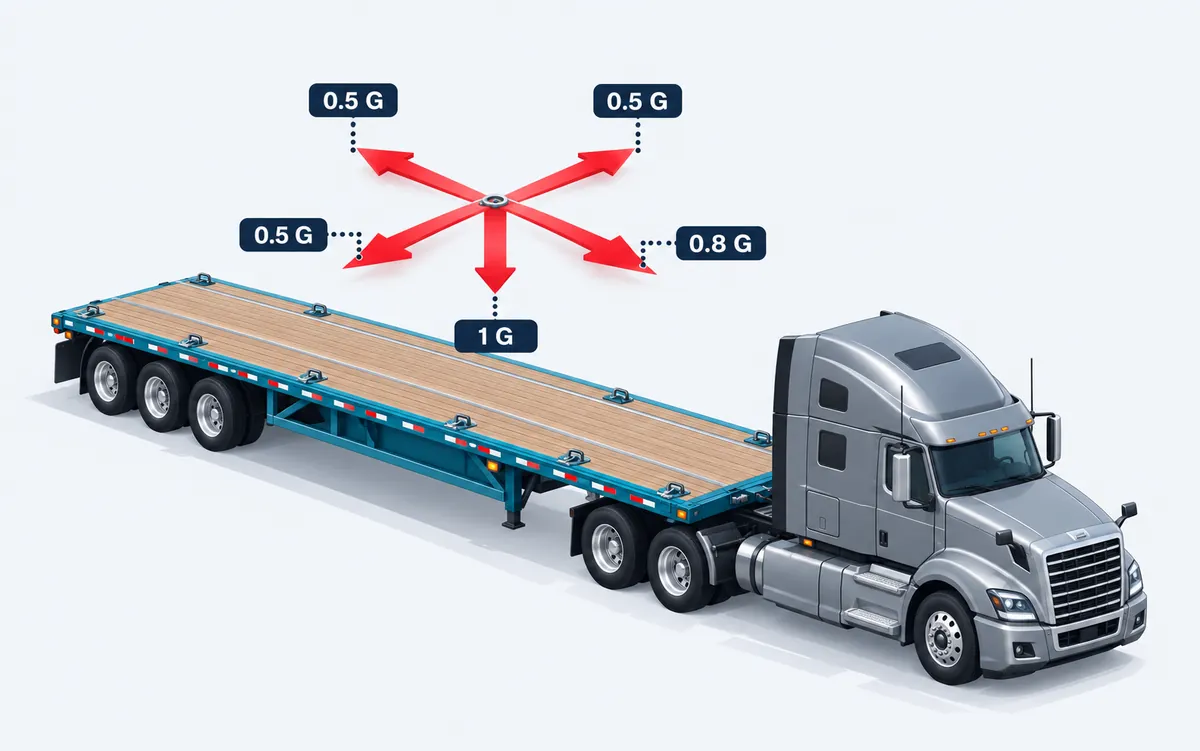
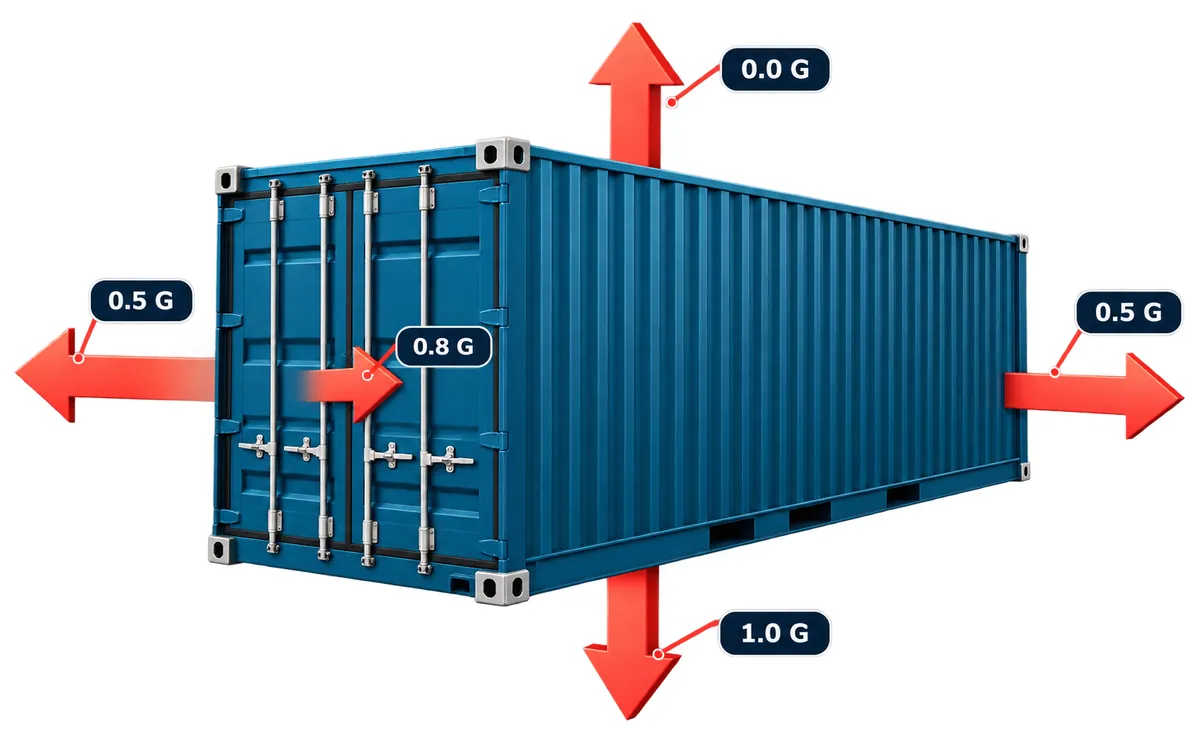
Braking, cornering and bumps push a load in every direction. Forces are measured in g — 1 g equals the weight of the load itself, so 0.5 g sideways means a push of half the load's weight. Every load needs securing against them.


Dunnage bags fill the gaps so the load can't build up speed and slam into the walls or doors. Find your bag size.
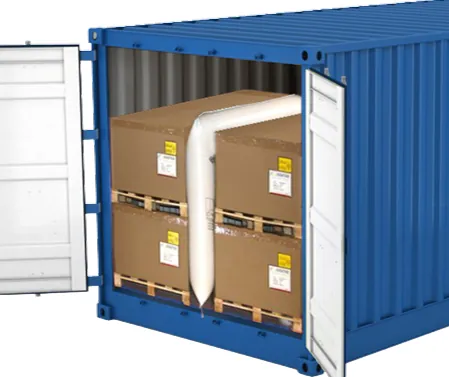
Load cargo as tightly as possible and leave the gap in the middle or at the rear, not at the walls.
Slide the deflated bag into the gap, centered, with the valve facing you and clear of sharp edges.
Use an inflator — ideally with a gauge — until the bag is firm against both faces of the load.
Make sure the bag isn't touching the floor or ceiling and the load is upright, then close up.

Bags hold loads apart. They are not designed to stop a load pushing against the trailer or container doors.
Fill to firm, not rock-hard. An inflator with a gauge keeps pressure consistent from bag to bag.
Corners, nails and broken pallet boards can puncture a bag. Cover or remove them first.
Too small a bag over-stretches; too large folds and loses grip. Use the size chart above, and a twin or square bag for extra-wide gaps.
Loads can shift in transit. Stand clear as doors open, then deflate bags before unloading.
An inflatable bag placed in the empty space between pallets or cargo. When inflated it presses the load tight so it can't shift, tip or crush during transport.
A woven polypropylene (PP) outer stands up to moisture, punctures and rough handling, so the bag keeps its grip from loading dock to delivery — including in humid ocean containers.
Measure the gap between your loads. The bag should be slightly narrower than the load face it touches and fill the gap when inflated. If the gap is too wide for one bag, use a twin bag or a square bag. Our team will recommend sizes when you send your load details.
Measure the gap. If one woven PP bag can't fill it, use a twin dunnage bag — two bags joined side by side. For gaps over 12 inches (30 cm) in a container, a square dunnage bag fills the space on its own; square bags are not meant for high loads. Compare bags.
Heavier, denser loads need a higher strength level. See the strength levels table above, or tell us your load weight and how you ship and we'll match the level.
Yes — aluminum inflator guns for shop or truck air (with or without a pressure gauge), and portable battery inflators that need no air compressor. See all inflators.
Send us your load details and quantities — we'll come back with a bulk quote.